From Indian borewells to rural water projects across the globe, stainless steel submersible pumps are replacing older materials — and the reasons go deeper than corrosion resistance alone.
By SLEKA Engineering Team · October 31, 2026 · 11 min read
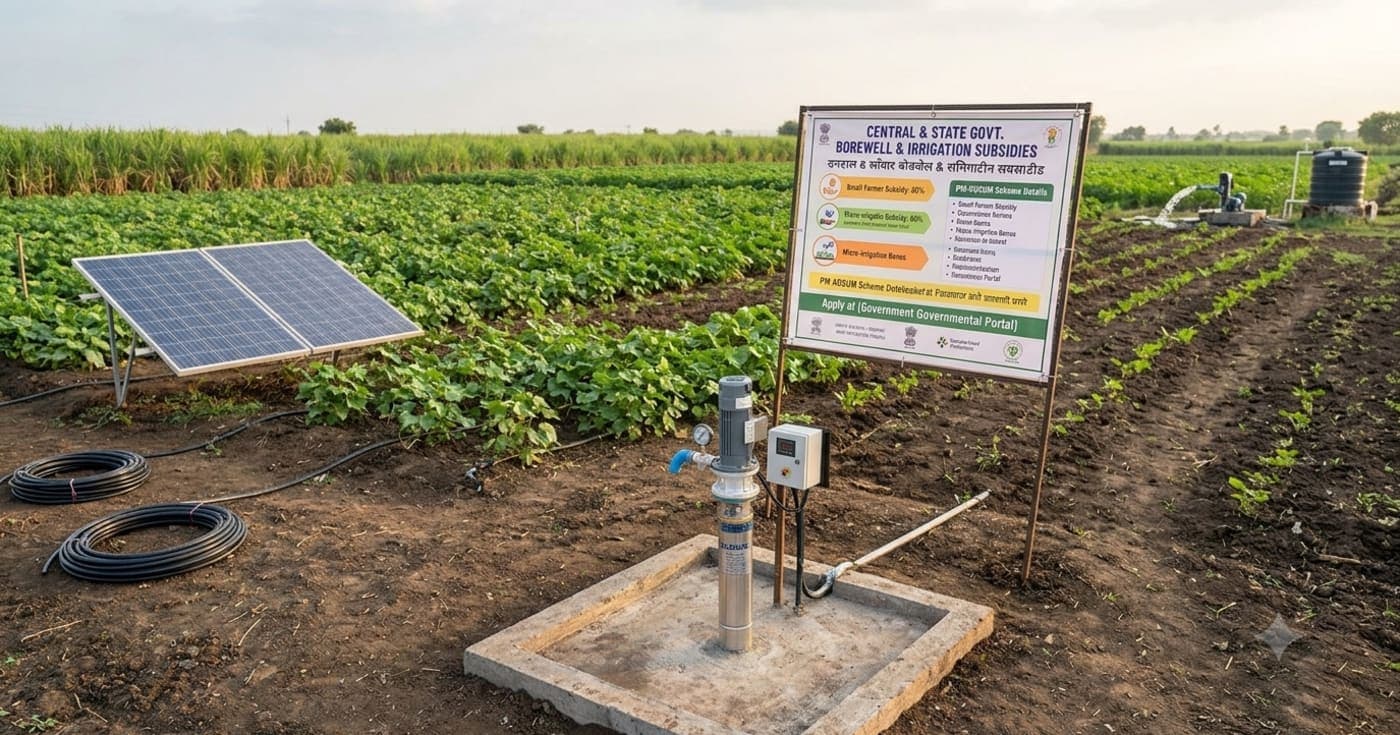
If you have spent any time researching submersible pumps — whether for an irrigation project, a rural water supply scheme, or a borewell installation — you have likely noticed a clear trend: stainless steel models now dominate the conversation in ways they simply did not a decade ago. Dealers are stocking more of them. Government tender specifications are listing them by name. Farmers who once bought cast iron pumps are asking specifically for stainless steel on their second or third purchase.
So what is actually driving this shift? Is it marketing, or is there something genuinely different about how stainless steel submersible pumps perform in real field conditions? This post sets out to answer that question honestly — covering the engineering reasons, the economic logic, and the practical realities that are making stainless steel the material of choice for water lifting across India and in water markets worldwide.
Understanding this shift matters whether you are a farmer evaluating your next borewell pump, a dealer advising customers, or an installer working on a solar pumping project under a scheme like PM KUSUM. The material a pump is made from has a direct impact on how long it lasts, how often it fails, and what it costs over a full service life — not just at the point of purchase.
---
For most of the twentieth century, submersible pumps were built primarily from cast iron, brass, or engineering plastics. Each of these materials has real strengths, and they are not obsolete — but each also has limitations that become very apparent in demanding water conditions.
Cast iron corrodes in aggressive or slightly acidic water. It is heavy, which makes installation and extraction more difficult. It can crack under mechanical stress or water hammer. Brass handles corrosion better but is expensive and, in some markets, a target for theft or adulteration in the supply chain. Plastics are lightweight and corrosion-resistant but can struggle with high sand concentrations, higher temperature water, or the mechanical stresses of deep-well operation.
Stainless steel — particularly grades used in pump construction — addresses several of these limitations at once. Its key properties in a pumping context are worth understanding individually.
Water is rarely pure. Borewell water across much of India contains dissolved minerals, chlorides, iron compounds, and sometimes mild acidity. In coastal regions, salinity in the water table is a serious problem. In agricultural regions where fertilisers have leached into groundwater, chemical concentrations can be high enough to damage pump components within months.
Stainless steel's resistance to this kind of chemical attack is not absolute — the specific grade matters, and no material is immune to every condition — but in the range of water chemistries found in most agricultural and domestic borewells, SS alloys outperform cast iron significantly in maintaining structural integrity and surface quality over time.
Borewell water often carries sand and fine particulates, especially in pumps pulling from sandy aquifers or newly drilled borewells. The abrasion this causes can wear down impellers and diffusers rapidly in softer materials. Stainless steel's hardness means it handles sand-laden water better over time, maintaining hydraulic efficiency longer before performance degrades.
This matters practically. A pump that loses 15–20% of its flow rate due to impeller wear within two years is effectively a different machine from the one that was installed. Stainless steel components tend to hold their dimensional tolerances — and therefore their rated performance — for longer periods under these conditions.
---
One of the most important shifts in how buyers evaluate pumps — particularly experienced farmers, project engineers, and dealers who have seen multiple pump cycles — is a move away from upfront cost as the primary decision factor toward total cost of ownership.
This is a significant change in buying behaviour, and it is one that directly benefits stainless steel pumps.
Pulling a submersible pump from a borewell is not a trivial operation. It requires equipment, labour, and time. If a pump fails and needs to be replaced, the cost of extraction and reinstallation often equals or exceeds the pump's original purchase price — especially in deep borewells. When this happens once every two or three years, the economics of a cheaper upfront purchase erode quickly.
Buyers who have experienced this cycle more than once tend to arrive at the same conclusion: a pump that lasts significantly longer, even if it costs more initially, usually delivers better value. This is the economic argument that has driven a great deal of the growth in stainless steel submersible pump adoption among farmers and installers who make decisions based on experience rather than catalogue price.
In rural India, the availability of service matters enormously. A pump that breaks down during the kharif or rabi sowing season can have serious consequences for a farmer. Stainless steel pumps, when sourced from established manufacturers, tend to have spare parts that are more standardised and widely available. The longer intervals between service requirements also reduce the burden on dealers and installers who support large numbers of installations across wide geographies.
For dealers building a business on repeat customer relationships and word-of-mouth referrals, recommending a product that performs reliably over years is a commercial strategy, not just good service. The growing preference for stainless steel among experienced dealers reflects this reality.
---
No discussion of the growth of stainless steel submersible pumps in the Indian market is complete without acknowledging the role of government solar pumping initiatives. PM KUSUM — the Pradhan Mantri Kisan Urja Suraksha evam Utthaan Mahabhiyan — has created significant demand for solar-compatible submersible pumps across India's agricultural states.
Solar pumping systems operate differently from grid-connected pumps. They run on variable DC power, which means the motor speed — and therefore the pump's operating conditions — fluctuates with sunlight availability. This places different mechanical stresses on pump components than a constant-frequency AC supply does.
Moreover, solar pumping installations are often in remote locations where service visits are infrequent and costly. The incentive to install hardware that will run reliably without intervention for extended periods is therefore higher than in a system connected to the grid. Stainless steel's durability profile makes it a natural fit for these installations, which is reflected in the material specifications increasingly included in project tenders.
For farmers and project implementers evaluating solar pumping options, understanding the compatibility between pump material and solar drive systems is an important part of the decision. [SLEKA's solar pumping range](https://slekaind.com/epc-solar) is designed around these operational realities.
Government procurement in India increasingly references BIS standards for submersible pumps. While certification itself is the manufacturer's responsibility to obtain and maintain, the broader point is that tender specifications have become more detailed and technically demanding over time. Material quality — including the use of appropriate stainless steel grades — is part of what procurement authorities assess. This has had the effect of raising baseline quality expectations across the market.
---
The shift toward stainless steel submersible pumps is not confined to India. Across Sub-Saharan Africa, the Middle East, and parts of Southeast Asia and Latin America, water infrastructure projects face similar challenges: aggressive groundwater chemistry, high sand content in aquifers, remote installation sites, and limited service infrastructure.
These conditions make the same arguments for stainless steel that apply in India equally relevant in international markets. Rural electrification projects in East Africa, borehole water supply schemes in the Gulf region, and agricultural water lifting in Southeast Asia all share a common need: equipment that works reliably in difficult conditions with minimal intervention.
For importers, distributors, and EPC contractors operating in these markets, material quality has become a competitive differentiator. Specifying stainless steel pumps is increasingly a way to distinguish a supply offering — and to reduce the warranty and replacement costs that come with premature product failures in the field.
Private label and OEM buyers, in particular, have found that building their brand on stainless steel product ranges positions them more credibly with project clients and institutional buyers than commodity plastic or cast iron alternatives. The ability to point to material specifications and manufacturing standards is a tangible sales advantage in competitive tendering environments.
Manufacturers like [SLEKA Industries](https://slekaind.com/) that produce stainless steel submersible pumps with export capabilities are well positioned to serve this international demand, offering product ranges that meet the technical requirements of diverse global markets.
---
Not all stainless steel pumps are equivalent. The designation "stainless steel" covers a wide range of alloys with different properties, and the quality of manufacturing — tolerances, assembly, motor winding quality, seal selection — is as important as the base material.
Buyers evaluating stainless steel submersible pumps should consider:
- Grade of stainless steel used in critical components such as the pump body, impellers, diffusers, and motor housing
- Motor quality and insulation class, particularly relevant for solar-driven installations where voltage and frequency variability is higher
- Hydraulic performance data — the pump's performance curve showing flow rate against head across its operating range
- Availability of spare parts and whether the manufacturer supports a service network in the buyer's region
- Certifications relevant to the target market — BIS for Indian market applications, and appropriate international standards for export markets
- Manufacturer transparency — whether the supplier can provide technical documentation, factory audit access, and consistent quality across production batches
For those evaluating product options, [SLEKA's full product range](https://slekaind.com/products) provides a useful reference point for understanding the specifications that a quality SS submersible pump manufacturer should be able to offer.
---
The rising popularity of stainless steel submersible pumps in Indian and global water markets is not a trend driven by marketing. It reflects a genuine shift in how buyers — farmers, dealers, government project managers, and international importers alike — evaluate pump technology when they move from first-time purchase to experienced, repeat decision-making.
The combination of corrosion resistance, mechanical durability, compatibility with solar pumping systems, and stronger total cost economics over a full service life makes stainless steel the rational choice in a wide range of applications. As water infrastructure projects become larger, more technically specified, and more accountable for long-term performance, this advantage will only become more relevant.
If you are in the process of evaluating submersible pump options for your project, your dealership stock, or your supply chain, the [SLEKA Industries](https://slekaind.com/) team is available to provide technical guidance and product information. Visit [slekaind.com](https://slekaind.com/contact) to get in touch.
---
Q1: Is stainless steel always better than cast iron for submersible pumps?
In most borewell and groundwater applications where water contains dissolved minerals, chlorides, or sand, stainless steel offers meaningful advantages in corrosion resistance and longevity. Cast iron can still perform adequately in benign water conditions, but its limitations become apparent faster in chemically aggressive or abrasive water environments. For most practical installations in India and similar markets, stainless steel is the more reliable long-term choice.
Q2: Does the grade of stainless steel used in a pump matter?
Yes, significantly. Different stainless steel grades have different corrosion resistance, hardness, and mechanical properties. A pump marketed simply as "stainless steel" without specifying the alloy grade may use lower-grade material in some components. When evaluating pumps, it is worth asking manufacturers specifically about the grades used in critical components like impellers, diffusers, and pump bodies.
Q3: Are stainless steel submersible pumps compatible with solar pumping systems?
Yes. Stainless steel submersible pumps are widely used in solar pumping installations, including those under PM KUSUM. Their durability is particularly valuable in remote solar installations where service access is limited. Motor and controller compatibility is also an important consideration — the pump, motor, and solar controller should be specified together by a supplier who understands solar drive system requirements.
Q4: What should a dealer consider before stocking stainless steel submersible pumps?
Key considerations include the range of bore sizes and flow-head combinations most common in the local market, spare parts availability from the manufacturer, the manufacturer's after-sales support policy, and BIS certification for relevant product categories. Dealers who stock from established manufacturers with consistent quality controls tend to have better customer retention outcomes over time.
Q5: Can stainless steel submersible pumps be used in coastal or high-salinity groundwater areas?
This depends on the specific salinity levels and the alloy grade of the stainless steel. Higher-grade alloys with greater chloride resistance are available and should be specified for genuinely saline conditions. For coastal installations or areas known to have brackish groundwater, buyers should discuss water chemistry specifics with their pump supplier to ensure the right grade is selected rather than assuming all stainless steel performs equally in high-salinity environments.
