For international distributors and importers looking to expand their pump portfolio, OEM manufacturing partnerships offer a direct path to faster product launches, better margins, and reliable supply.
By SLEKA Engineering Team · November 3, 2026 · 9 min read
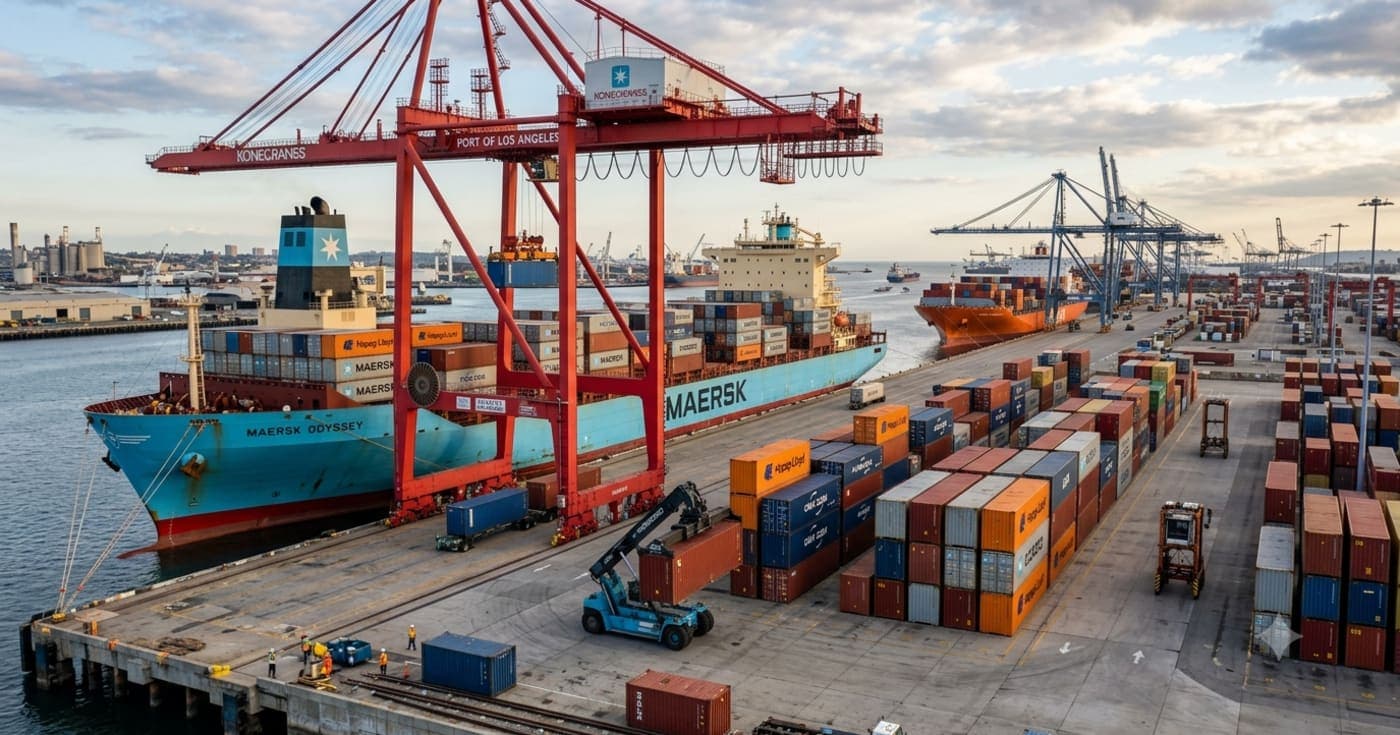
Growing a pump product range in competitive markets — whether in East Africa, the Gulf, Southeast Asia, or Latin America — is not simply a matter of finding more inventory. International distributors and importers face a more specific challenge: they need products that carry their brand identity, meet regional certifications, and arrive on predictable timelines without the capital burden of building their own manufacturing infrastructure.
That is exactly the problem OEM pump manufacturing solves. By partnering with an established pump manufacturer capable of producing to specification, private labelling finished goods, and managing documentation end to end, international brands can expand their product range in months rather than years.
This post is written for buyers who are already evaluating OEM pump suppliers — importers, regional distributors, EPC contractors, and brand owners who want to understand what a professional OEM partnership looks like, what to expect from the process, and why [SLEKA Industries](https://slekaind.com/) is a manufacturing partner worth a serious conversation.
---
The term OEM — Original Equipment Manufacturer — is used loosely in the pump industry. For international buyers, it is worth being precise about what a genuine OEM manufacturing relationship delivers.
In a true OEM partnership, the manufacturer produces pumps and motors to the buyer's specifications, applies the buyer's brand name and packaging, and treats the product design as commercially exclusive to that buyer within agreed territories. This is fundamentally different from simply purchasing off-the-shelf pumps with a sticker change.
Most international buyers begin with private label OEM — standard pump models manufactured to established specifications, packaged and branded under the buyer's name. This is the fastest route to market and typically carries the most flexible minimum order quantities.
A second tier, specification-built OEM, involves modifying pump dimensions, motor ratings, impeller materials, or connection standards to match local infrastructure requirements. This is common for buyers supplying markets with specific voltage standards, borewell casing sizes, or solar controller compatibility requirements. [SLEKA's OEM programme](https://slekaind.com/oem) accommodates both approaches, allowing buyers to start with private label and evolve toward custom specifications as volumes grow.
A detail many first-time OEM buyers overlook is territory protection. A credible OEM manufacturer will not supply the same private-label product to two competing distributors in the same geography. Buyers should discuss exclusivity terms, minimum annual volume commitments, and territory definitions clearly before finalising any OEM agreement. This is standard practice in professional OEM partnerships and protects the commercial investment both parties are making.
---
The practical advantage of OEM pump manufacturing is product range expansion without proportional cost escalation. Instead of stocking one or two pump models and turning away orders outside that specification, a distributor with an OEM manufacturing partner can offer a coherent, branded catalogue covering multiple head ranges, flow rates, motor types, and power sources.
Most established distributors already have a core product. The OEM partner's role is often to fill the gaps — adding higher-head models for deep borewell applications, lower-flow models for domestic and small agricultural use, or solar-compatible variants for off-grid markets. Each addition carries the same brand identity, creating a more compelling proposition for your end buyers and contractors.
Solar submersible pumping systems represent one of the fastest-growing segments across Sub-Saharan Africa, the Middle East, and South Asia. Distributors who can offer a complete solar pumping package — pump, motor, controller, and mounting documentation — command stronger margins and win more tender business than those offering components alone. [SLEKA's solar pumping systems](https://slekaind.com/epc-solar) are available under OEM arrangements, enabling distributors to add solar to their range without sourcing from multiple manufacturers.
For buyers operating in markets with local content requirements or preferential import tariffs on unassembled goods, [CKD (Completely Knocked Down) pump supply](https://slekaind.com/ckd) is a practical range extension strategy. CKD kits allow the buyer or their local partner to assemble finished pumps in-country, satisfying regulatory requirements while maintaining consistent component quality from the manufacturing source.
---
Buyers evaluating OEM pump suppliers for the first time often have the same practical questions. Here is what a structured OEM engagement looks like at SLEKA.
Professional OEM buyers do not commit to volume before testing product. The process typically begins with a sample order — a small quantity of the target model shipped to the buyer for field testing, certification pre-checks, and internal review. This stage is critical and should not be bypassed in the interest of speed.
Sample lead times depend on whether the model is a standard product or requires specification modification. Standard models are generally faster to sample. Buyers should request full technical documentation — dimensional drawings, motor winding specifications, material declarations, and test certificates — alongside the physical sample.
Minimum order quantities in OEM pump manufacturing vary significantly based on the level of customisation involved. Private label arrangements on standard models typically carry lower MOQs than specification-built custom products, which require dedicated tooling or winding configurations. SLEKA works with buyers to structure realistic opening orders that allow market entry without excessive inventory risk, scaling MOQ commitments as the commercial relationship matures.
For international buyers, certification documentation is often the deciding factor in supplier selection. Buyers sourcing for markets with mandatory import certifications, public tender requirements, or retail compliance standards need manufacturers who can supply the right paperwork reliably.
SLEKA produces stainless steel submersible pumps and motors with documentation available to support CE marking processes, BIS certification, and country-specific import requirements. Buyers are advised to communicate their destination market's certification requirements at the earliest stage of inquiry so that documentation can be prepared in parallel with production. Visit the [SLEKA importers and distributors page](https://slekaind.com/importers-distributors) for an overview of how international partnerships are structured.
Most OEM buyers purchasing from India prefer FOB (Free on Board) pricing as the basis for their landed cost calculations. SLEKA ships from Indian ports and can prepare complete export documentation including commercial invoices, packing lists, certificates of origin, and phytosanitary or inspection certificates as required by the destination country. Buyers with established freight relationships typically handle their own forwarding on FOB terms.
---
There are many pump manufacturers in India. The question for a serious buyer is not whether you can find a supplier — it is whether you can find a manufacturing partner capable of sustaining a long-term OEM relationship with consistent quality, honest communication, and the documentation discipline international trade requires.
[SLEKA Industries](https://slekaind.com/) manufactures stainless steel submersible pumps and motors designed for durability in demanding borewell and surface applications. The use of stainless steel across wetted components — as opposed to cast iron or plastic — is a deliberate engineering choice that directly affects pump lifespan in corrosive or sandy water conditions, which is a primary concern for buyers in agriculture-heavy and off-grid markets.
Beyond the product, what differentiates SLEKA for OEM buyers is process maturity. Private label branding, CKD supply, solar system integration, and export documentation are not new activities — they are established workflows with known lead times and clear points of contact. Buyers are not asking SLEKA to build a new capability; they are engaging a manufacturer that already operates this way.
Explore the full [SLEKA product range](https://slekaind.com/products) to identify the models most relevant to your target market before making contact.
---
If you are an importer, distributor, or brand owner evaluating OEM pump manufacturing partners, the next step is straightforward. Prepare a brief on your target market, the pump specifications you need (head range, flow, motor rating, power source), your branding requirements, and your anticipated annual volumes. That information allows SLEKA to respond with a meaningful proposal rather than a generic catalogue.
[Request a Price List or Start With a Sample Order — Contact SLEKA Today](https://slekaind.com/contact)
Bring your specification. We will bring the manufacturing capability.
---
Q1: What is the minimum order quantity for OEM private label pump orders from SLEKA?
MOQ depends on the product type and level of customisation. Private label orders on standard stainless steel submersible pump models generally carry lower minimums than specification-modified products. Contact SLEKA with your target model and volumes for a specific MOQ confirmation.
Q2: Can SLEKA supply CE documentation for pumps being imported into European or Gulf markets?
SLEKA can provide technical documentation to support CE marking and regional certification processes. Buyers should communicate their destination market's certification requirements during the initial inquiry so documentation preparation can be aligned with the production schedule.
Q3: Does SLEKA offer territory exclusivity for OEM distributors?
Yes. Territory protection is a standard part of SLEKA's OEM partnership structure. Exclusivity terms, volume commitments, and geographic scope are agreed in writing before production begins. Buyers should raise territory requirements early in the discussion.
Q4: What shipping terms does SLEKA offer for international OEM orders?
SLEKA ships on FOB terms from Indian ports as standard for international OEM buyers. CIF arrangements can be discussed depending on the buyer's freight requirements. Full export documentation is provided with every shipment.
Q5: Can I order a sample before committing to an OEM volume order?
Yes. SLEKA recommends starting with a sample order for evaluation and field testing before committing to full OEM volumes. Sample lead times vary based on whether the required model is a standard product or requires specification modification. [Contact SLEKA](https://slekaind.com/contact) to initiate a sample request.
