Southeast Asia's solar pump market is accelerating fast in 2026, and Indian OEMs who move decisively now stand to capture high-value distributor relationships across Vietnam, Indonesia, the Philippines, and beyond.
By SLEKA Engineering Team · July 14, 2026 · 10 min read
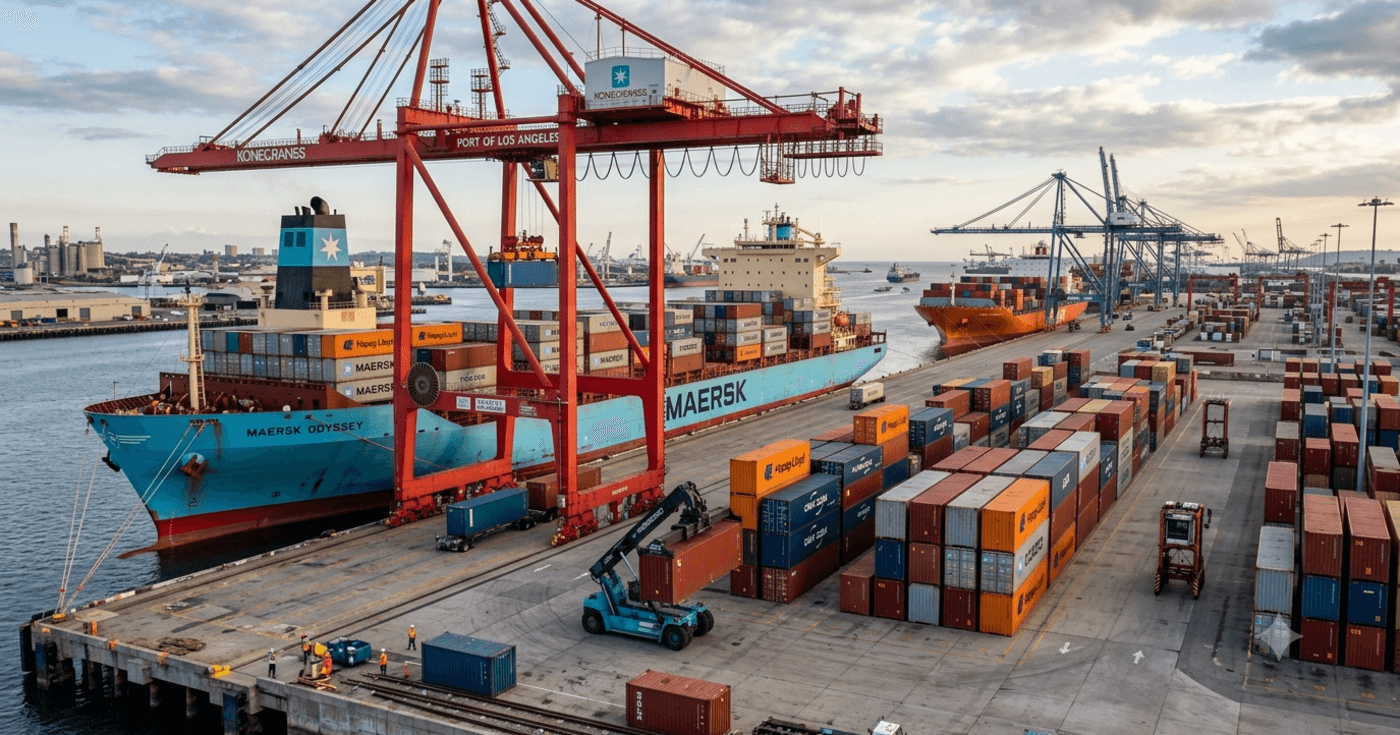
Southeast Asia's solar pump market in 2026 is no longer a frontier opportunity—it is an active, competitive arena where procurement cycles are shortening, government subsidy frameworks are maturing, and regional distributors are actively scouting for reliable OEM supply partners. For Indian manufacturers, the timing could not be more favorable. Years of domestic scale-up under India's PM-KUSUM scheme have created a class of solar pump OEMs with genuine production depth, competitive USD pricing, and technical expertise that matches—and often exceeds—what Chinese or European suppliers can offer at equivalent price points.
The question for Indian OEMs in 2026 is no longer *whether* to export to Southeast Asia, but *where exactly* to focus, *which buyer segments* to prioritize, and *how to structure* the commercial and logistics arrangements that make sustained export viable. This post breaks down the market landscape country by country, examines the product specifications that Southeast Asian buyers actually demand, and outlines what Indian suppliers—including established exporters like SLEKA Industries—are doing to win and retain distributor relationships across the region.
For distributors and procurement managers reading this from Vietnam, Indonesia, the Philippines, Thailand, or Myanmar, the analysis below is designed to help you evaluate Indian OEM partners with a sharper lens. The data points, certification requirements, and commercial structures discussed here reflect real conditions on the ground in early 2026.
Across Southeast Asia, smallholder farmers face a converging set of pressures: erratic rainfall linked to La Niña and El Niño cycles, rising diesel costs, and expanding agricultural land under irrigation. The Food and Agriculture Organization estimates that irrigated agriculture in the ASEAN bloc needs to expand by roughly 15–20% over this decade to meet food security targets. Diesel-powered pumps remain the default solution in most of rural Vietnam, eastern Indonesia, and Mindanao in the Philippines—but at USD 1.10–1.40 per liter for diesel, the operating economics are increasingly painful.
Solar pumps eliminate the fuel cost entirely. A well-sized solar pump system in central Vietnam or Java can pay back its capital cost within 2.5 to 4 years under current diesel prices, compared to 5–7 years just three years ago. That compressed payback period is a powerful commercial argument, and regional distributors who have struggled to close deals on solar pumps in previous years are now finding buyers far more receptive.
Several Southeast Asian governments have introduced or expanded subsidy and concessional finance mechanisms that directly benefit solar pump adoption. Indonesia's Ministry of Agriculture has budgeted expanded irrigation electrification programs for 2025–2027. Vietnam's Ministry of Agriculture and Rural Development has integrated solar pumping into provincial irrigation master plans in the Mekong Delta. The Philippines' Department of Agriculture, under its Sustainable Agriculture Program, has earmarked funds for solar-powered water systems targeting smallholder rice and vegetable growers.
For Indian OEMs, these government programs matter because they often anchor large tender-based procurement cycles—predictable volumes, defined specifications, and credible payment mechanisms. OEMs with the right certifications and the ability to supply in bulk on short lead times will consistently outcompete those without.
Vietnam is arguably the most immediately accessible large market for Indian solar pump OEMs in 2026. The country's agricultural sector is large, technically literate, and accustomed to importing equipment. Vietnamese distributors are sophisticated buyers who will conduct detailed comparative evaluations. They want AC and DC solar pump systems in the 1 HP to 10 HP range, IP55 or higher motor protection, and increasingly they require IEC 62253 or equivalent certification documentation.
Price competitiveness is critical in Vietnam—Chinese suppliers have been aggressive—but Indian OEMs who can demonstrate superior after-sales support structures, longer warranty terms (3–5 years), and faster spare parts availability are winning deals. Lead times of 30–45 days from confirmed order to CIF Ho Chi Minh City are achievable and expected.
Indonesia's archipelagic geography creates both the need for decentralized solar pumping solutions and real logistical challenges for foreign suppliers. The outer islands—Sulawesi, Kalimantan, Papua—have acute irrigation needs and limited grid infrastructure, making solar pumps a natural fit. Jakarta-based distributors often manage onward distribution to these regions, so Indian OEMs typically work through a two-tier channel structure.
Product requirements in Indonesia skew toward higher-head submersible pumps for deeper boreholes, with three-phase AC systems preferred for larger agricultural operations. SNI certification (Indonesian National Standard) is increasingly checked during customs clearance for electrical products—OEMs who have proactively obtained or are working toward SNI compliance will have a meaningful advantage through 2026 and beyond.
The Philippines presents a growing mid-tier opportunity. Procurement is more fragmented—provincial cooperatives, NGO-linked agricultural programs, and private farm operators all buy separately—which means Indian OEMs need distributor partners with strong provincial reach rather than just Manila-based traders. Myanmar's market has been disrupted by political and economic instability but pockets of demand persist, particularly through humanitarian and development organization procurement channels.
Based on active RFQs circulating among Southeast Asian distributors in early 2026, the most requested Indian solar pump configurations are: submersible DC pumps (BLDC motor) in 0.5 HP to 3 HP for shallow well applications; surface-mounted AC solar pump sets in 2 HP to 7.5 HP for open canal and pond irrigation; and higher-capacity systems up to 15 HP for commercial vegetable farming and aquaculture operations.
Built-in MPPT controllers, dry-run protection, and remote monitoring compatibility (GSM or IoT-enabled) are increasingly specified even in mid-tier procurement. OEMs that have invested in these features domestically for PM-KUSUM compliance are well-positioned because the specifications overlap substantially with what Southeast Asian buyers need.
Distributors across Southeast Asia generally prefer FOB or CIF pricing, with payment terms of 30% advance against proforma invoice and 70% against Bill of Lading or LC at sight for first orders, moving to open account terms on proven relationships. Minimum order quantities of 20–50 units per SKU are workable for most Indian OEMs shipping via LCL container from JNPT or Chennai.
SLEKA Industries has structured its export documentation and packaging to support multi-country SEA distribution from a single consolidated shipment—a practical advantage for distributors who serve buyers across multiple countries and want to minimize per-unit logistics costs.
The single most consistent complaint from Southeast Asian distributors about previous Indian OEM experiences is inadequate after-sales support—slow spare parts supply, unclear warranty claim processes, and unresponsive technical teams. Indian OEMs who solve this systematically, whether through regional spare parts depots, dedicated export support teams, or authorized local service partner networks, will command both price premiums and repeat business loyalty.
Chinese solar pump suppliers have significant advantages in raw price and certain volume tiers. Indian OEMs should not attempt to compete purely on price. The winning positioning in Southeast Asia in 2026 emphasizes: longer warranty terms backed by demonstrated serviceability; English-language technical documentation and support (a genuine advantage over many Chinese suppliers in non-Mandarin markets); flexibility on custom configurations and smaller batch sizes; and the reputational credibility that comes from supplying the world's largest solar pump deployment under PM-KUSUM.
SLEKA Industries, for instance, highlights its domestic track record and customization capability to distributors who have previously been burned by inflexible volume minimums from Chinese counterparts.
For Indian OEMs targeting Southeast Asia seriously in 2026, the certification investment priorities are: IEC 60335 and IEC 62253 for core product compliance; BIS marking already held by most serious Indian OEMs; and country-specific marks (SNI for Indonesia, TIS for Thailand) where volumes justify the investment. CE marking, while European in origin, is also frequently referenced by sophisticated Southeast Asian procurement teams as a proxy quality signal.
Most successful Indian OEM–SEA distributor relationships follow a similar arc: a sample or pilot order of 10–30 units, a field installation and performance validation period of 3–6 months, followed by a first commercial order and then a framework supply agreement. OEMs who treat the pilot phase as a genuine investment—sending technical representatives for installation support, providing detailed performance documentation, and being proactive about any field issues—consistently convert pilots into durable commercial relationships.
AgriMach Asia, AGRITECHNICA Asia, and country-level agricultural trade fairs in Vietnam and Indonesia remain effective forums for Indian OEMs to meet qualified distributor prospects. Equally important in 2026 is a credible digital presence—a professional export-oriented website, downloadable product datasheets in English, and responsive inquiry handling. Distributors now routinely screen potential OEM partners digitally before initiating contact, and a weak online presence can disqualify an otherwise strong supplier before the conversation even starts.
---
Southeast Asia's solar pump market in 2026 represents a genuine, multi-year export opportunity for Indian OEMs who approach it with market-specific preparation rather than a generic export mindset. The combination of rising diesel costs, expanding government procurement programs, and growing distributor sophistication creates favorable conditions for Indian suppliers who can deliver technically sound products, credible certifications, responsive after-sales support, and commercially workable export structures.
The OEMs who will win the most ground over the next 24 months are those who are already mapping their distributor networks, investing in the right certifications, and building the operational infrastructure to support export at scale. SLEKA Industries is actively expanding its Southeast Asia distributor network and welcomes inquiries from qualified regional partners.
**Explore SLEKA Industries' export capabilities and product range at [slekaind.com](https://slekaind.com)**
---
**Q1: What solar pump HP ranges are most in demand across Southeast Asia in 2026?**
The highest-volume demand sits in the 0.5 HP to 7.5 HP range, with BLDC submersible pumps for shallow well applications and AC solar pump sets for surface irrigation being the most frequently specified. Higher-capacity systems up to 15 HP are growing in commercial farming and aquaculture applications.
**Q2: Do Indian solar pump OEMs need country-specific certifications to export to Southeast Asia?**
Core IEC certifications (IEC 60335, IEC 62253) and CE marking are widely recognized and often sufficient for initial market entry. Indonesia increasingly checks for SNI compliance, and Thailand references TIS standards. OEMs targeting significant volumes in a specific country should proactively evaluate country-specific certification requirements.
**Q3: What are typical payment and logistics terms for Indian OEM exports to Southeast Asian distributors?**
FOB or CIF pricing is standard. First orders typically involve 30% advance against proforma invoice and 70% against Bill of Lading or LC at sight. LCL shipments from JNPT or Chennai with 30–45 day lead times to major SEA ports are operationally standard for most Indian OEM exporters.
**Q4: How do Indian solar pumps compete with Chinese products in Southeast Asia?**
Indian OEMs compete most effectively on warranty terms, English-language technical support, flexibility on smaller batch sizes and custom configurations, and the credibility derived from large-scale domestic deployment under PM-KUSUM. Pure price competition with Chinese suppliers is generally not a winning strategy.
**Q5: How can a Southeast Asian distributor begin working with an Indian solar pump OEM like SLEKA Industries?**
The typical entry path is through an initial inquiry and technical consultation, followed by a sample or pilot order of 10–30 units. Distributors interested in exploring a supply relationship can initiate contact directly through slekaind.com to discuss product specifications, pricing, and regional support arrangements.