As regulatory pressure tightens in 2026, solar pump brands that lack the right BIS and ISO certifications risk losing tenders, distributor trust, and market share.
By SLEKA Engineering Team · July 9, 2026 · 7 min read
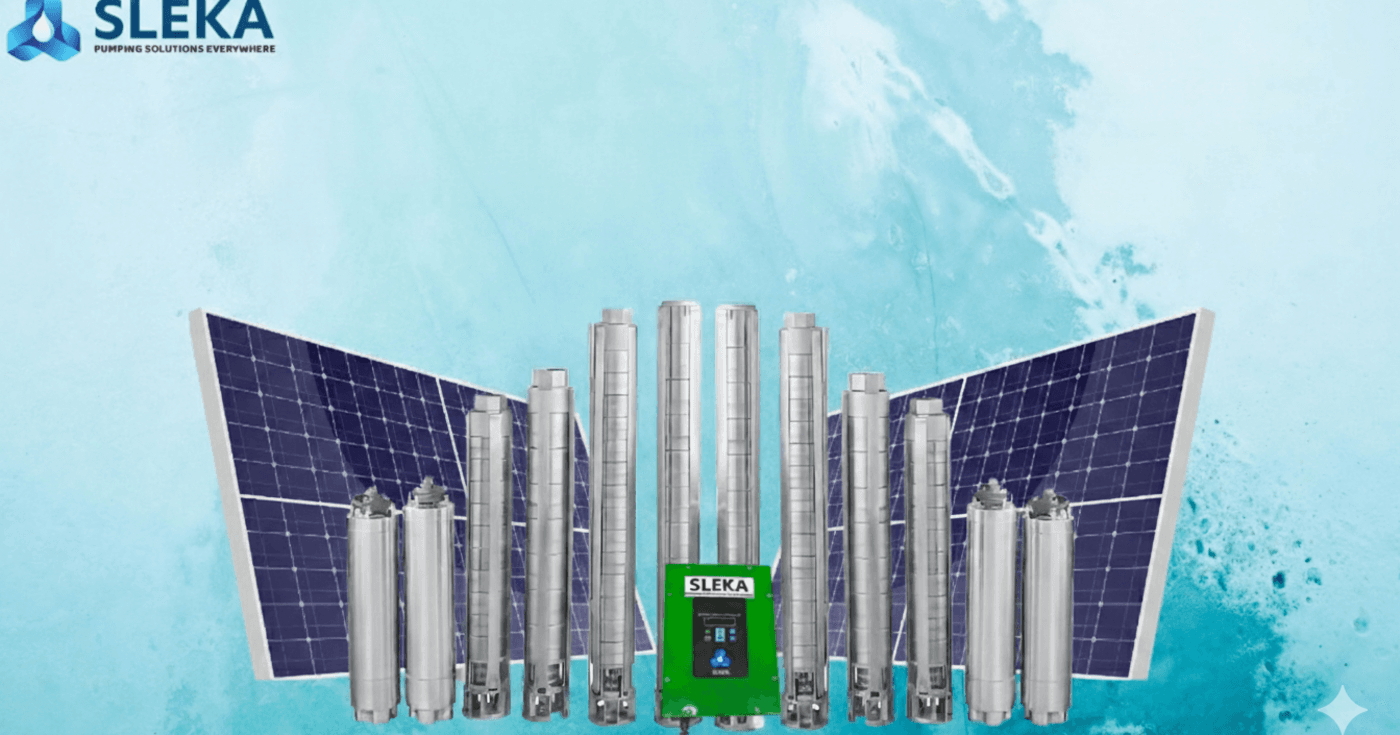
The Indian solar pump market is maturing rapidly. Government schemes like PM-KUSUM continue to drive large-scale procurement, and with that scale comes stricter quality gatekeeping. For OEMs, component suppliers, and solar pump brands operating in India, BIS and ISO certifications are no longer optional badges of honour — they are hard entry requirements for tenders, distributor agreements, and buyer confidence.
In 2026, the compliance landscape is more defined than ever. Bureau of Indian Standards (BIS) marks signal product safety and performance conformity to Indian standards, while ISO certifications communicate management systems maturity to enterprise buyers, government agencies, and institutional clients. Together, they form the credibility framework that separates serious solar pump manufacturers from fly-by-night assemblers.
At SLEKA Industries, we work closely with OEM partners and component buyers who ask the same question repeatedly: *Which certifications do we actually need, and which ones will make or break a deal?* This post answers that question with precision.
---
BIS certification under the Bureau of Indian Standards Act is mandatory for several categories relevant to solar pump systems. Missing even one applicable mark can disqualify a brand from PM-KUSUM empanelment or state government procurement lists.
This is the primary Indian Standard for solar photovoltaic water pumping systems. BIS certification under IS 16221 covers the complete pump system — motor, controller, and PV interface — and is the baseline requirement for most government tenders. Brands without this mark are routinely rejected at the pre-qualification stage. The standard addresses hydraulic performance, motor efficiency, controller compatibility, and system durability under Indian climatic conditions.
For motor manufacturers and OEMs supplying pump motors separately, BIS certification under IS 14970 is increasingly scrutinised by system integrators. As supply chain audits become more common in 2026, solar pump brands that source motors from BIS-certified component manufacturers gain a documentation advantage during tender submissions.
For pump systems that incorporate solar charge controllers as part of a hybrid or battery-backed architecture, IS 16169 certification becomes relevant. Brands offering multi-mode pump solutions should verify whether their controller configurations bring this standard into scope.
---
BIS addresses product compliance. ISO addresses *how you build, manage, and deliver* those products. For solar pump brands targeting large institutional buyers, government empanelment panels, and distribution networks, ISO certifications answer the question: *Can we trust this organisation at scale?*
ISO 9001 remains the foundational certification for any manufacturing organisation in 2026. It demonstrates that your quality processes are documented, auditable, and consistently followed — not just claimed. For solar pump brands, ISO 9001 certification is often a minimum requirement in distributor onboarding checklists and a prerequisite for larger OEM supply contracts. Without it, procurement teams have no objective basis to assess your process reliability.
As ESG considerations enter procurement decisions even at the mid-market level in India, ISO 14001 is gaining traction as a differentiator. Solar pump brands that can demonstrate structured environmental management — covering waste, energy use, and material sourcing — are better positioned for partnerships with organisations that carry their own sustainability commitments. It is also increasingly referenced in MNRE-aligned procurement frameworks.
For brands that manufacture in-house or operate significant assembly operations, ISO 45001 communicates workforce safety governance. While not yet universally mandated in solar pump tenders, it is appearing more frequently in enterprise buyer questionnaires and is worth pursuing in 2026 if your production scale justifies it.
---
Despite the clarity around which certifications matter, a significant number of solar pump brands in India — particularly those that scaled quickly during the PM-KUSUM rush — are operating with incomplete certification stacks. Common gaps include:
- **IS 16221 applied to only one product SKU**, while uncertified variants are sold under the same brand umbrella
- **ISO 9001 certificates that have lapsed** due to missed surveillance audits, often undiscovered until a tender submission fails
- **No documentation trail** for component-level certifications, creating vulnerability during third-party audits
- **Absence of ISO 14001**, which is increasingly disqualifying in public-private procurement rounds
Brands that conduct an internal certification audit before mid-2026 have sufficient time to close these gaps before the next major PM-KUSUM empanelment cycle. SLEKA Industries recommends that OEM partners treat certification readiness as a quarterly review item, not an annual afterthought.
---
The commercial impact of certification gaps is direct and measurable. Here is how it plays out in practice:
Most state nodal agencies now include BIS certification for IS 16221 as a mandatory document in technical bid submissions. Brands that cannot produce a valid BIS licence number for the specific product being offered are disqualified before evaluation begins — regardless of price competitiveness.
Established distributors operating in the solar pump segment have tightened their own compliance checklists in response to buyer pressure. A distributor taking on a new brand without ISO 9001 assumes reputational risk. In 2026, expect onboarding timelines to extend significantly for brands that cannot produce current, valid certificates at the first commercial conversation.
Certified brands command pricing premiums in institutional sales channels. When two technically comparable products compete on a tender, the certified brand justifies a higher price on the basis of compliance assurance — and buyers accept it because it reduces their own liability. For OEMs and component suppliers, certification is therefore a margin-protection strategy, not just a compliance exercise.
---
In 2026, the question for solar pump brands is not whether to pursue BIS and ISO certifications — it is whether your current certification stack is complete, current, and audit-ready. IS 16221 and IS 14970 establish your product's right to operate in the Indian market. ISO 9001, ISO 14001, and ISO 45001 establish your organisation's right to be trusted at scale.
At SLEKA Industries, we support OEM partners and component buyers in understanding exactly where their certification requirements begin and end — and how to close the gaps that are quietly costing them tenders and distribution relationships.
If you are reviewing your certification strategy for 2026, start the conversation at **slekaind.com**.
---
**Q1: Is BIS certification under IS 16221 mandatory for all solar pump products sold in India?**
A: For products supplied under government schemes such as PM-KUSUM, IS 16221 BIS certification is effectively mandatory. For purely private commercial sales, it is not legally required but is increasingly demanded by institutional buyers and distributors as a baseline trust signal.
**Q2: How long does it take to obtain BIS certification for IS 16221?**
A: The process typically takes between four and eight months, depending on testing laboratory capacity, documentation readiness, and BIS office workload. Brands targeting the next PM-KUSUM empanelment cycle should initiate the process immediately if not already certified.
**Q3: Can an ISO 9001 certificate from a previous business entity transfer to a new company or brand?**
A: No. ISO certifications are issued to specific legal entities and specific scopes. A new company or a significantly restructured entity must apply for fresh certification. Attempting to present a transferred or modified certificate during a tender submission carries serious disqualification risk.
**Q4: Does SLEKA Industries assist with certification documentation or compliance audits?**
A: SLEKA Industries works with OEM and component supply partners on product and process alignment. For specific certification body engagements, we recommend working directly with accredited third-party certification agencies, while we support on product specification and compliance readiness from the manufacturing side.
**Q5: Is ISO 14001 likely to become mandatory in solar pump tenders in the near future?**
A: Based on current MNRE and state nodal agency trends, ISO 14001 is moving from a differentiator to a likely requirement for larger contract values. Brands aiming for contracts above ₹5 crore in public procurement should treat ISO 14001 certification as a near-term necessity rather than a long-term aspiration.